


News and Information
Comparing Online and Offline Selective Soldering Machines – Which Device Is Right for You!
2025-12-11
In the electronic printed circuit board (PCB) manufacturing industry, selecting the right soldering equipment plays a crucial role in ensuring product quality and optimizing production efficiency. Currently, two popular types of soldering machines are online selective wave soldering machines and offline selective wave soldering machines; each type has its own unique advantages and is suited to different production models. So what exactly are the differences between these two types of machines? Which one should businesses choose to achieve the highest efficiency? In the article below, we will clarify these points and compare the effectiveness of online and offline selective wave soldering machines, helping you gain a deeper understanding of these two devices!
What is an Online Selective Wave Soldering Machine?
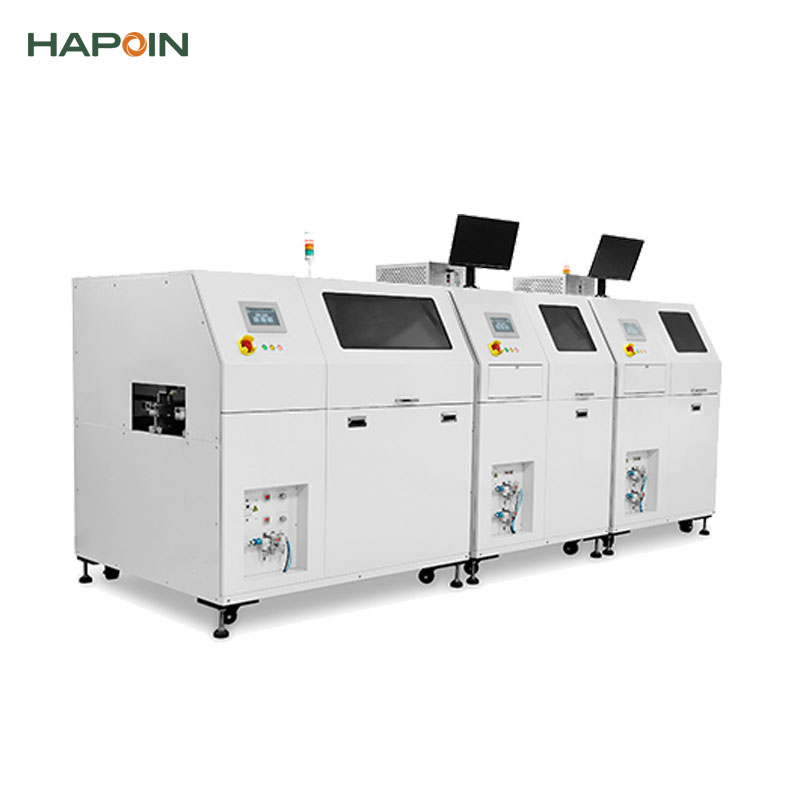
An online selective soldering machine is an automated soldering device integrated directly into the SMT production line, helping to optimize the printed circuit board (PCB) manufacturing process. This technology enables precise soldering of through-hole components without affecting surrounding components, ensuring high and consistent connection quality.
Operating principle:
- Automatic flux spraying The precision flux spraying system applies an appropriate amount of flux to the soldering locations on the PCB, helping to improve wetting and prevent oxidation during the soldering process.
- Preheating The PCB is heated to the appropriate temperature to prepare for the soldering process, minimizing thermal shock and ensuring solder joint quality.
- Selective wave filtering The PCB moves through the soldering zone, where molten solder is precisely controlled to make contact with the leads of the components to be soldered. The intelligent control system accurately positions the soldering points, ensuring that each solder joint meets high-quality standards.
Application:
Online selective soldering machines are particularly well-suited for large-scale production lines that demand high precision and automation. Integrating these machines directly into SMT systems helps minimize human intervention, boost productivity, and ensure product consistency. However, the initial investment cost for this type of machine is relatively high; therefore, businesses need to carefully weigh the benefits against the costs before making an investment decision.
What is an Offline Filtered Wave Soldering Machine?
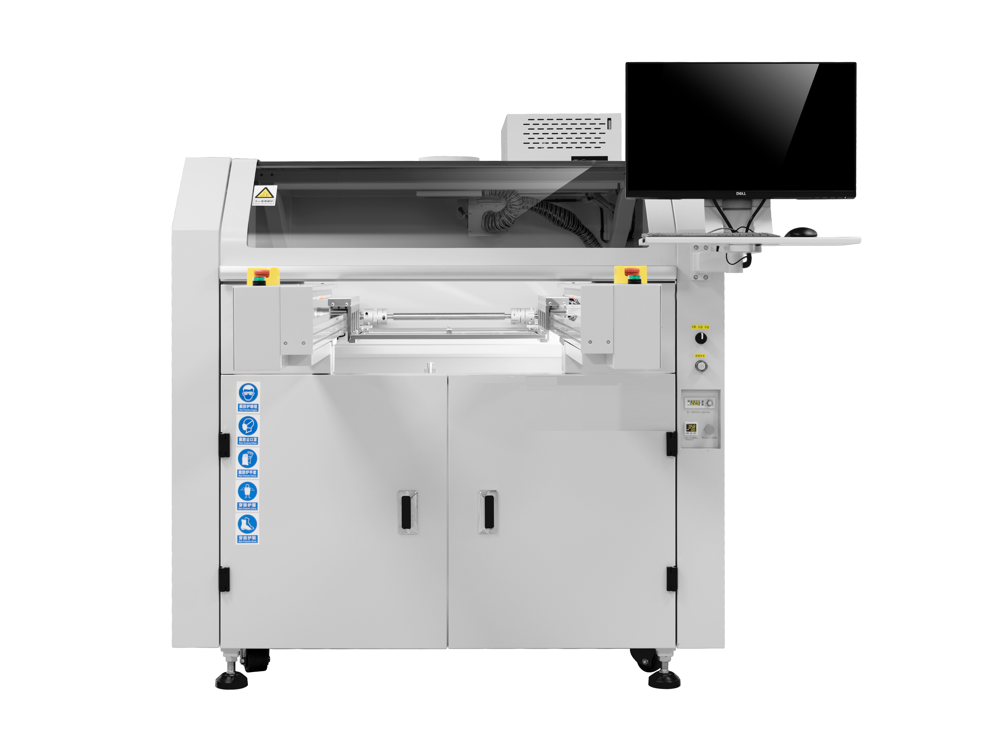
An offline selective wave soldering machine is a standalone soldering device that does not connect directly to the production line. This type of machine is particularly suitable for businesses with flexible production needs, small-batch orders, or for testing new products before mass production.
Operating principle
- The PCB is manual placement Insert the device to perform the welding process.
- The automatic spray nozzle or soldering head moves to the position requiring soldering.
- The molten solder comes into contact with the component leads, forming a durable connection and ensuring solder joint quality.
Applications of offline wave soldering machines
- Small-scale production: Suitable for businesses that need to produce small quantities or according to customer requirements.
- Test run: Support the inspection and quality assessment of products before they are put into mass production.
- Low cost: No large investment required in the automated production line system, helping to save budget.
Offline selective soldering machines offer flexibility and cost optimization for businesses. However, their production speed is slower than that of online soldering machines due to the greater need for manual operations. Therefore, choosing the right type of machine will depend on the scale of production and actual usage requirements.
Comparison of online and offline selective wave soldering machines
Both online and offline selective soldering machines play a crucial role in the modern PCB manufacturing industry. However, each type has its own distinct characteristics, making them suitable for different production needs. To select the optimal equipment, it’s necessary to consider factors such as performance, soldering speed, degree of automation, operating costs, and labor requirements. In this section, we will evaluate the differences between these two machine lines based on key criteria.
Welding Performance & Speed
Welding performance and speed are two key factors that determine a company's ability to meet its production targets.
Online wave soldering machine It features faster welding speeds thanks to a continuous automated process. Components are welded directly on the conveyor belt in a fully automated manner, eliminating the need for manual movement to other areas. This optimizes production time and is particularly well-suited for large-scale, mass-production lines.
Offline wave soldering machine It operates in an independent mode. PCBs need to be fed into the machine in clusters or individual boards, resulting in a slower processing speed. However, this approach allows for better soldering quality control, making it suitable for prototype production or small orders.
In terms of overall performance, online wave soldering machines generally have an advantage in large-scale production thanks to their continuous processing capability, which reduces downtime between stages. Conversely, offline soldering machines excel in providing more flexible inspection and adjustment of the soldering process, minimizing soldering defects by allowing careful setup time before operation begins.
Automation & Applications
The degree of automation of selective wave soldering machines directly affects production efficiency and applicability in each line configuration model.
Online wave soldering machine It features a high degree of automation. The system is directly integrated into the SMT production line, enabling continuous soldering of components without the need for manual intervention. This reduces human error and optimizes production efficiency. As a result, the machine is well-suited for large-scale factories that need to process large volumes of PCBs in a short period of time.
Offline wave soldering machine It has lower automation due to its independent operation. PCBs must be manually fed into the machine, either individually or in batches, before soldering can proceed. This allows for tight control over each solder joint but requires more manpower. The machine is suitable for small workshops, where production is intermittent or where new product testing is needed.
In terms of application, online welding machines are suitable for mass production and automated lines where high speed and optimized labor costs are required. Meanwhile, offline welding machines are ideal for research & development (R&D), prototype manufacturing, or small-batch orders that demand higher quality control.
Manufacturing Flexibility
The flexibility of each machine type in manufacturing will affect the optimization of processes and the ability to meet diverse business needs. Each machine type has its own unique characteristics that are suited to different production models.
- Online wave soldering machine It has limited flexibility due to being designed for continuous operation in SMT lines. Once the parameters are set and the machine is programmed, making changes to the configuration or switching between products will take time. This makes the machine suitable for mass production. large quantity , where it is necessary to ensure high synchronicity but without many changes to the PCB design.
- Offline wave soldering machine has higher flexibility. Because it operates independently, the machine can easily adjust parameters for each individual order. Therefore, it is suitable for workshops. Pilot production , prototype manufacturing , or those orders Small-scale production, diverse designs The operator can customize the temperature, welding speed, and welding time for each type of component without affecting the overall process.
Regarding adaptability, offline machines help businesses. quickly change the product design , aligning with technology trends and customer requirements. Meanwhile, the online machine mass production optimization , helping to reduce costs per product but offering less flexibility when PCB designs need to be changed.
Investment & Operating Costs
Cost is an important factor when choosing between online and offline wave soldering machines Both types of machines have different investment levels and operating costs, which affect the company's economic calculations.
1. Initial Investment Cost
- Online wave soldering machine has a higher cost due to system integration automation , smart sensors and capabilities Continuous operation on the production line. The initial investment cost could be several times higher. 1.5 – 2 times compared to the offline machine.
- Offline wave soldering machine is cheaper, suitable for small business , medium-sized manufacturing workshops and organizations that have a need to test products.
2. Operating & Maintenance Costs
- Online machine consumes more electricity due to continuous operation. However, because of its automatic system , it helps reduce labor costs , reduce welding defects, thereby cost-effective bug fixing .
- Offline device It saves more electricity because it only operates when needed. However, it requires manual intervention Therefore, labor costs may be higher if the production volume is large.
3. Long-term Usage Efficiency
- Online machine suitable for large-scale production , helping businesses optimize cost per product , accelerate the payback period.
- Offline device suitable for producing a diverse range of designs , helping to save costs when frequently changing products.
Technical & Labor Requirements
| Criteria | Online Wave Soldering Machine | Offline Wave Soldering Machine |
| Technician level | Requires highly skilled technicians who are proficient in software operation. | Basic-skilled technicians can use it. |
| Automation level | High, integrated into the automated production line | Low, requires a lot of manual operation. |
| Programming & Integration | Programming is needed to optimize the production process. | No complex programming required, operates independently. |
| Quality control | Automatic control, synchronized production | Dependent on manual operation, prone to errors. |
| Maintenance & Repair | Regular maintenance request with a specialized technician | Easier to maintain, but the soldering iron and solder bath need regular inspections. |
Should You Choose an Online or Offline Wave Soldering Machine?
From a technical and manufacturing strategy perspective, comparing online and offline soldering machines is not merely a choice between two devices—it’s also a crucial step in optimizing the entire production line. Each type of machine has its own distinct strengths: online soldering machines excel in high automation, continuous operation, and precision, whereas offline machines offer flexibility and cost-effectiveness, making them particularly suitable for small orders or R&D needs.
Choosing the right equipment should be based on key factors such as plant scale, production frequency, technical requirements, and investment resources. Large-scale enterprises can benefit most from the synchronization and high efficiency of online machines. Meanwhile, small and medium-sized enterprises may prioritize offline machine solutions to start off economically while still ensuring quality.
In summary, there is no single, fixed answer for every production model—only the solution that best suits practical needs. Understanding the differences and application potential of each type of machinery is the key for businesses to develop more efficient, sustainable, and flexible production strategies in the modern industrial era.
Contact Us
Contact Number:
+86 21 6088 8500
+86 4006 777 950
+86 150 2686 5822
Email:
marketing@hapoin.com
Headquarter Address:
6, South Metropolis Garden, No. 1165, Jindu Road, Minhang District, Shanghai
OUTLETS
Service Outlets

Shanghai-Head Office
Shanghai Hapoin Enterprise Development Co., Ltd.
Address: Building 6, Southern Metropolis Garden, No. 1165, Jindu Road, Minhang District, Shanghai
Telephone:+86 150 2686 5822
Email:info@hapoin.com
Shenzhen Branch
Shenzhen Hapoin Ruihe Technology Development Co., Ltd.
Address: Room 302, 3rd Floor, Building B, Kaicheng High-tech Park, Dalang Street, Longhua District, Shenzhen
Telephone:+86 0755 2223 2285
Email:sales@hapoin.com
Hong Kong Branch
HAPOIN ENTERPISE LIMITED
Address: Unit 917A, 9/F., Tower A, New Mandarin Plaza, No. 14 Science Museum Road
Telephone:+00852 61187991
Email:sales@hapoin.com
Vietnam Branch
HAPOIN VIETNAM
Address: 6th Floor, CTM Office Building, No. 139, Zhipiao Road, Zhipiao District, Hanoi, Vietnam
Telephone:+84 398 848 969
Email:sales@hapoin.com
Japan Branch
HAPOIN CO., LTD.
Address: 6th Floor, 2-3-8 Iwamotocho, Chiyoda-ku, Tokyo
Telephone:+81 070 9356 1267
Email:sales@hapoin.com
Kunshan Office
Kunshan Office
Address: 10th Floor, Building B, Modern Plaza, No. 8, Weiye Road, Yushan Town, Kunshan City
Telephone:+86 150 2686 5822
Email:sales@hapoin.com
Taipei Branch
Uniwin Chemical Co.,LTD.
Address: No. 14, Alley 3, Lane 250, Section 2, Huanhe South Road, Taipei 10853
Telephone:+886 02 2336 2202
Email:sales@hapoin.com
Beijing Office
Beijing Office
Address: Room 306, Building 4, Zhongtou Oriental, West Zhihe North, Chaoyang District, Beijing
Telephone:+86 150 2686 5822
Email:sales@hapoin.com






Contact Number
Headquarter Address
6, South Metropolis Garden, No. 1165, Jindu Road, Minhang District, Shanghai
Follow the official account
Follow the video account

