


News and Information
6 Common Electrical Wire Stripping Machine Errors and How to Completely Fix Them
2025-12-04
Common electrical wire stripping machine errors and how to fix them
During the operation of wire stripping machines, encountering technical malfunctions is inevitable, especially when the equipment operates continuously in harsh industrial production environments. These issues can stem from various causes, such as incorrect settings, component wear and tear, or suboptimal working conditions. A clear understanding of these... electric wire stripping machine error Frequently encountered issues and their corresponding solutions will not only help users quickly resolve problems but also extend the lifespan of the machine, ensuring maximum production efficiency.
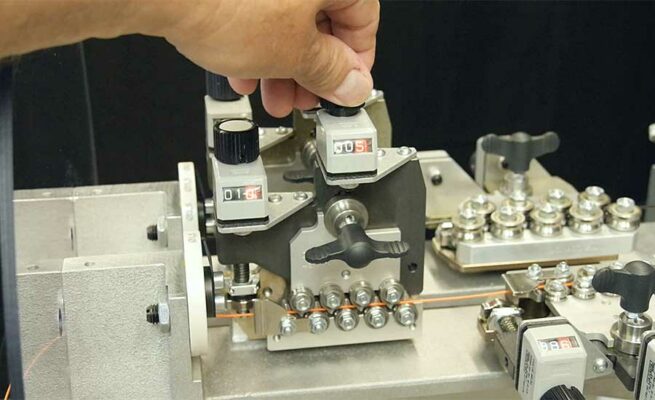
The device fails to start up or does not respond when powered on.
- The power supply is unstable, such as when the voltage is too low (below the device's required level—typically 220V or 110V depending on the model) or the outlet is loose.
- The power switch is damaged due to prolonged use, with internal contacts becoming oxidized or the circuit being broken.
- The cable connecting the power source to the device is broken internally, or the connector is loose due to vibrations during operation.
- The programmable logic controller (PLC) or control software is malfunctioning, possibly due to firmware errors, incorrect settings, or system freezes.
Specific troubleshooting steps:
- First, check the power source using a multimeter to confirm that the input voltage matches the device’s specifications. If the outlet is loose, replace it or tighten it securely.
- Try turning the power switch on and off several times, and observe the power indicator light on the device. If there is no response, remove the switch and visually inspect or use a measuring instrument to check the contacts; replace the switch if any damage is detected.
- Use your hands to check the cable from the power source to the device, paying special attention to frequently bent areas. If you suspect an internal break or damage, replace the cable with a new one that has the same specifications (thickness, load capacity).
- For system control errors, reset the machine according to the instructions in the technical documentation (usually by pressing the reset button or disconnecting the power supply for 5–10 minutes). If it still does not function, contact the supplier to have the software checked or to replace the PLC if necessary.
Note: Before troubleshooting, be sure to turn off the power supply to ensure safety.
The electrical wire is stripped unevenly, cut to the wrong length, or has an unclean insulation layer.
- The cutting blade becomes worn after prolonged use, reducing its sharpness, or the blade may become misaligned from its original adjustment position due to loose fixing screws.
- The machine’s setting parameters (stripping length, blade pressure, wire-pulling speed) are not suitable for the type of wire being processed—for example, soft PVC wire requires lower pressure than hard rubber wire.
- The wire clamp is loose or dusty, causing the wire to slip during stripping, which leads to dimensional inaccuracies.
Specific troubleshooting steps:
- Remove the cutting blade, and inspect the blade edge under light to detect any wear or chipping. If necessary, replace the blade with a new one (choose a type compatible with your machine model) and re-align it using a caliper to ensure the blade is centered correctly.
- Access the control panel, check and adjust parameters such as stripping length (e.g., 5mm, 10mm), blade pressure (typically between 0.5–2 bar depending on the machine), and wire-pulling speed. Perform a test run on a short section of wire before starting mass production.
- Clean the wire clamp with isopropyl alcohol and a soft brush to remove any dirt, then tighten the screws securing the clamp using a screwdriver. Make sure the wire is held firmly but not squeezed too tightly, which could cause it to deform.
This is one of the l each wire stripping machine commonly, it often involves routine maintenance, as the cutting blades and clamping jaws are naturally wearing parts that require attention to avoid affecting subsequent failures.
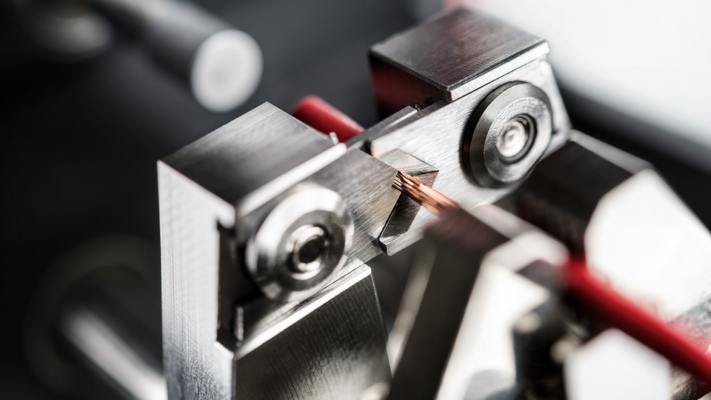
The device is emitting unusually loud noises or shaking violently.
- The internal motor or gears lack lubricating oil, leading to significant friction between metal parts when operating at high speeds.
- Electric wire stripping machine malfunction This can occur when the cutting blade strikes the wire forcefully due to excessive setting pressure, especially when handling wires with thick or rigid jackets.
- The electrical wire is stuck in the stripping mechanism due to an improper wire size (too large or too small for the machine’s specifications).
How to fix:
- Disconnect the power supply, open the protective cover of the mechanical mechanism, and inspect the motor and gears. Apply specialized lubricant oil (such as industrial machine oil ISO VG 68) to the contact points, rotate the hand crank to ensure even oil distribution, then run a test of the machine at low speed.
- Reduce the blade pressure on the control panel and observe whether the noise decreases. If the noise persists, check whether the blade is misaligned and adjust it accordingly.
- Stop the machine, and use your hand or small pliers to remove the stuck wire segment from the stripping mechanism. Then, check the wire specifications (diameter, insulation thickness) against the machine’s limits, and adjust or replace the wire with a suitable type.
Loud noise is one. Common faults of wire stripping machines It could be an early sign of more serious problems, such as engine failure, so it needs to be addressed immediately to avoid long-term damage.
The electrical wire has a torn insulation jacket or damaged copper core inside.
- The cutting blade is too sharp or the cutting pressure is too strong, causing the blade to pierce through the outer jacket and damage the copper core inside, especially with thin wires.
- The stripping speed is not synchronized with the type of wire—for example, a fast speed can cause strong jerks on soft wires, while a speed that’s too slow can make the cutting blade linger, resulting in tears.
- The wire quality is poor; the outer jacket tears easily, or the copper core is uneven, making it prone to breakage under tensile stress.
Specific troubleshooting steps:
- Reduce the blade pressure on the control panel and check the results on a sample wire segment. If it still tears, replace the blade with a moderately sharp blade suitable for thin wires.
- Adjust the stripping speed (typically between 50-100 mm/s depending on the machine), and run test runs at different speeds to find the optimal balance between speed and accuracy.
- Inspect the coils before inserting them into the machine, removing any sections with cracked insulation or exposed copper cores. Choose a reputable wire supplier to ensure quality.
This is an error closely related to parameter settings—a recurring issue throughout the... electric wire stripping machine error different, requiring the operator to have a clear understanding of the characteristics of each type of cable.
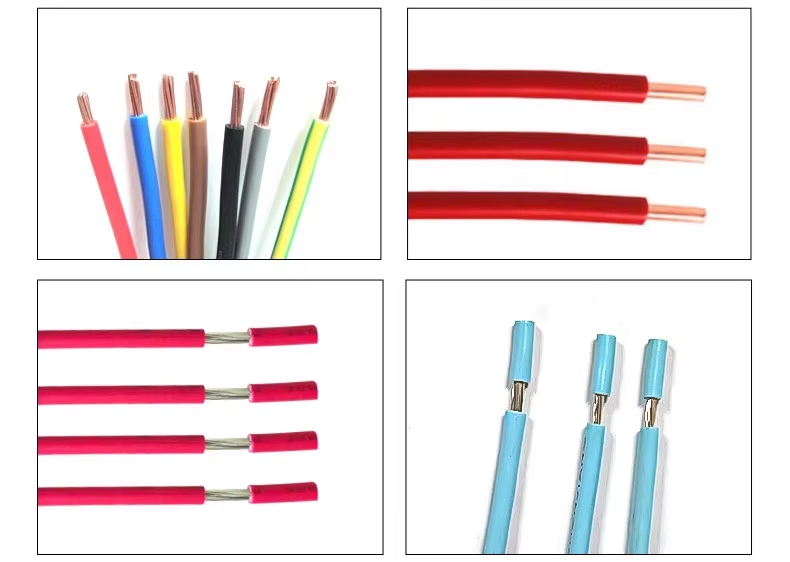
The machine stops abruptly midway or shuts down repeatedly on its own.
- The safety sensor detects malfunctions such as jammed wires, abnormal pressure, or motor temperature exceeding the threshold (typically above 70-80°C).
- The electrical system is overloaded due to continuous operation at high power, causing the fuse to blow or the protective relay to trip automatically.
- The machine operates in hot, humid, or poorly ventilated environments, causing the temperature to rise rapidly.
Specific troubleshooting steps:
- Check the sensor area (usually near the cutting blade or wire clamp), remove any trapped wires or obstructions, then press the reset button on the control panel to restart.
- Open the device's electrical box, visually inspect the fuse (if it’s blown, you’ll see the metal wire inside is broken) or use a multimeter. Replace the fuse with a new one of the same specifications and check the input power load.
- Allow the machine to cool down for at least 20-30 minutes. If necessary, place a cooling fan near the engine area. Ensure that the workspace is well-ventilated and avoid direct sunlight or high humidity.
- This issue often stems from insufficient maintenance or overload operation—a problem that needs to be addressed in parallel with mechanical faults.
The wire insulation is not completely stripped or remnants remain.
- The cutting blade is not deep enough due to incorrect installation or blade wear, resulting in only a partial cut through the peel instead of a full cut.
- The wire has a sheath that is too thick, exceeding the machine's cutting capacity (for example, the machine can only handle wires under 5mm, but the actual wire is 7mm).
- Dust and small fragments of wire insulation accumulate in the cutting mechanism, reducing the efficiency of the blade.
Specific troubleshooting steps:
- Increase the cutting depth on the control panel (you can increase it by 0.1–0.2 mm each time), run a test, and observe the results. If the blade is worn, replace it and readjust it.
- Compare the wire specifications with the machine’s limits (see the technical documentation); if necessary, select a machine with higher power or reduce the wire gauge.
- Use compressed air or a soft brush to clean the cutting blade area and wire clamp after each shift, ensuring that no debris remains to obstruct operation.
Conclusion
Wire strippers are an important tool in industrial manufacturing, the... electric wire stripping machine error Issues such as failure to start, uneven stripping, excessive noise, damaged wires, sudden stops, or incomplete wire stripping can all occur if proper attention is not paid to operation and maintenance. A clear understanding of the underlying causes and the implementation of detailed corrective measures—such as checking the power supply, adjusting parameters, replacing components, and performing regular cleaning—will enable users to minimize downtime and significantly enhance machine performance. Moreover, training employees, using genuine parts, and maintaining an ideal working environment will be key to fully unlocking this equipment’s potential, ensuring that the production line operates smoothly and efficiently in an industrial landscape that increasingly demands precision and high speed.
Contact Us
Contact Number:
+86 21 6088 8500
+86 4006 777 950
+86 150 2686 5822
Email:
marketing@hapoin.com
Headquarter Address:
6, South Metropolis Garden, No. 1165, Jindu Road, Minhang District, Shanghai
OUTLETS
Service Outlets

Shanghai-Head Office
Shanghai Hapoin Enterprise Development Co., Ltd.
Address: Building 6, Southern Metropolis Garden, No. 1165, Jindu Road, Minhang District, Shanghai
Telephone:+86 150 2686 5822
Email:info@hapoin.com
Shenzhen Branch
Shenzhen Hapoin Ruihe Technology Development Co., Ltd.
Address: Room 302, 3rd Floor, Building B, Kaicheng High-tech Park, Dalang Street, Longhua District, Shenzhen
Telephone:+86 0755 2223 2285
Email:sales@hapoin.com
Hong Kong Branch
HAPOIN ENTERPISE LIMITED
Address: Unit 917A, 9/F., Tower A, New Mandarin Plaza, No. 14 Science Museum Road
Telephone:+00852 61187991
Email:sales@hapoin.com
Vietnam Branch
HAPOIN VIETNAM
Address: 6th Floor, CTM Office Building, No. 139, Zhipiao Road, Zhipiao District, Hanoi, Vietnam
Telephone:+84 398 848 969
Email:sales@hapoin.com
Japan Branch
HAPOIN CO., LTD.
Address: 6th Floor, 2-3-8 Iwamotocho, Chiyoda-ku, Tokyo
Telephone:+81 070 9356 1267
Email:sales@hapoin.com
Kunshan Office
Kunshan Office
Address: 10th Floor, Building B, Modern Plaza, No. 8, Weiye Road, Yushan Town, Kunshan City
Telephone:+86 150 2686 5822
Email:sales@hapoin.com
Taipei Branch
Uniwin Chemical Co.,LTD.
Address: No. 14, Alley 3, Lane 250, Section 2, Huanhe South Road, Taipei 10853
Telephone:+886 02 2336 2202
Email:sales@hapoin.com
Beijing Office
Beijing Office
Address: Room 306, Building 4, Zhongtou Oriental, West Zhihe North, Chaoyang District, Beijing
Telephone:+86 150 2686 5822
Email:sales@hapoin.com






Contact Number
Headquarter Address
6, South Metropolis Garden, No. 1165, Jindu Road, Minhang District, Shanghai
Follow the official account
Follow the video account

