


News and Information
Comparison of DIP and SMD: Differences in Assembly, Applications, and Performance
2025-12-01
In the electronics manufacturing industry, electronic components can be assembled using two main methods: DIP (Dual In-line Package) and SMD (Surface Mount Device). Each method has its own distinct characteristics in terms of structure, assembly process, and applications. While DIP is a traditional technology in which components are inserted through holes in the PCB, SMD is a modern technology that allows components to be mounted directly onto the surface of the printed circuit board. To gain a deeper understanding of the differences between these two methods, let’s explore each type in detail.
Introduction: What are DIP and SMD?
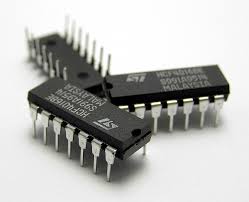
What is a DIP (Dual In-line Package)?
DIP (Dual In-line Package) is a type of electronic component packaging with two parallel rows of pins, designed to be inserted through a printed circuit board (PCB). These components can include integrated circuits (ICs), amplifiers, ROM and RAM memory, or high-power components such as relays and transformers.
DIP components typically have from 4 to 64 pins, with standard sizes such as DIP8, DIP14, DIP16, DIP28, and DIP40, depending on the number of connections required. The package material can be epoxy resin or ceramic, which helps protect the component from environmental factors. They are mounted onto PCBs using through-hole technology (THT).
Through-Hole Technology (THT) is a traditional assembly method for DIP components. This technology enhances mechanical durability, as the component leads pass through the PCB and are securely soldered in place with solder. However, it requires a larger area on the PCB, and the assembly process typically takes more time compared to SMD technology.
What is an SMD (Surface Mount Device)?
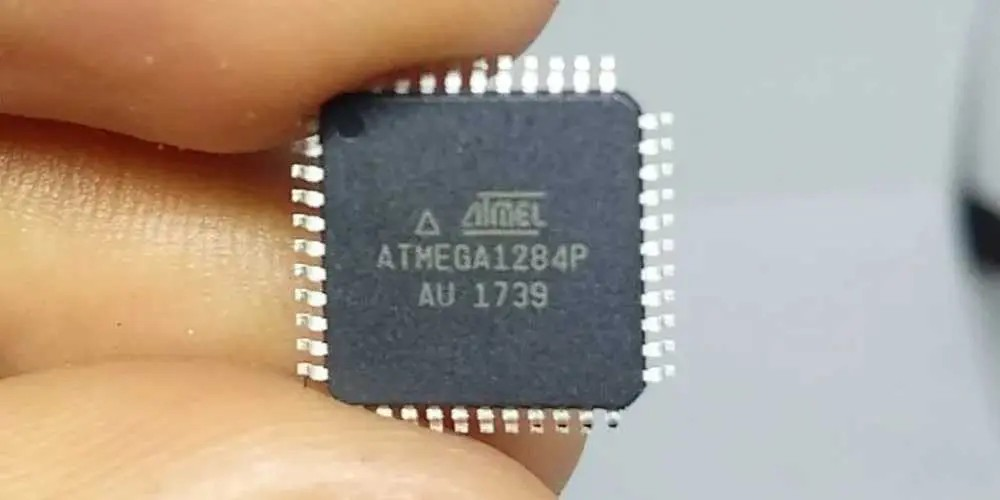
SMD (Surface Mount Device) is a type of electronic component that does not have leads penetrating the PCB; instead, it features small contact pads that are directly mounted onto the surface of the PCB. This technology enables the manufacture of compact electronic devices with high component density, such as smartphones, laptops, and embedded control boards.
Compared to DIP components, SMD components are much smaller in size, with common standards such as SOIC, QFP, BGA, and LGA. Thanks to this design, the manufacturing process can be fully automated, helping to reduce costs and increase productivity. The assembly method on PCBs uses Surface Mount Technology (SMT).
Surface Mount Technology (SMT) is a modern method for assembling SMD components. SMT helps accelerate production, reduce labor costs, and save PCB space; however, it has the disadvantage of being more difficult to repair than DIP, due to the small size of the components and the high technical requirements involved in replacement. Today, most of the electronics industry is shifting from DIP to SMD to improve efficiency, cut costs, and optimize PCB design. Nevertheless, DIP still plays an important role in fields that demand high durability and easy component repairability.
Comparison of DIP and SMD: Differences in Structure & Assembly Technology
DIP: Traditional design with two rows of through-hole pins for PCB mounting
DIP (Dual In-line Package) components feature a design with two parallel rows of pins that are inserted through holes in the PCB (Printed Circuit Board) and soldered in place to establish electrical connections. The relatively large size of DIP components makes manual handling and assembly easier.
Some key features of DIP
- Two rows of PCB pins, ensuring a secure mechanical connection.
- Easy to grip and easy to assemble, suitable for small-scale production or manual repairs.
- It has excellent vibration resistance, thanks to the pins being securely fixed to the circuit board by through-hole soldering.
SMD: Compact design, no through-hole pins on the PCB
In contrast, SMD (Surface Mount Device) components have a design that does not feature through-hole pins; instead, they have small contact pads that are directly mounted onto the surface of the PCB. These components are extremely compact in size, allowing for optimal use of PCB space, thereby increasing component density on the circuit and reducing the overall size of the product.
Some key features of SMD
- There are no through-hole PCBs; only soldering contacts that are directly attached to the surface.
- Compact, space-saving PCB design allows for high-component-density circuit designs.
- Suitable for automated production, helping to increase production speed and reduce labor costs.
Comparison of DIP and SMD Component Assembly Technologies
| Criteria | DIP assembly (THT - Through-Hole Technology) | SMD assembly (SMT - Surface Mount Technology) |
| Basic assembly process | Insert components through the PCB holes. Solder components by hand or using wave soldering. Cut off excess legs & inspect welds | Apply solder paste onto the PCB pad. Place SMD components using an automatic pick-and-place machine. Heat in a reflow soldering oven to secure. |
| Advantages | Firm connection, excellent resistance to vibration Easy to repair, replace faulty components. | High automation, enabling rapid production Reduce PCB size to suit compact devices. Lower production costs due to the absence of drilling holes. |
| Disadvantages | Occupies PCB area due to components with long leads. Not optimal for mass production, as it requires many manual steps. | Difficult to repair; requires specialized equipment. Not suitable for high-power devices, as the solder joints tend to detach under high loads. |
Comparison of DIP and SMD: Applications in the Electronics Industry
Although DIP (Dual In-line Package) and SMD (Surface Mount Device) differ significantly in terms of structure and assembly technology, both still play a crucial role in the electronics industry. Below are the practical applications of each type of component.
Applications of DIP components
DIP components are commonly used in high-power devices, offering high durability and ease of repair. Below are some typical applications:
- High-power, high-load device
DIPs are used in power supplies and amplifiers thanks to their ability to handle high currents and their excellent heat dissipation. In military and aerospace equipment, the DIP's robust mechanical connections enable it to withstand vibrations and operate reliably in harsh environments. - Industrial control circuits, telecommunications equipment
The control systems in factories use DIP components for easy maintenance and quick replacement without the need for specialized equipment. In telecommunications equipment, DIP remains popular due to its high reliability and simple component replacement capability. - Products manufactured in small quantities or requiring quick repairs
DIP is an ideal choice for research and prototyping devices, enabling engineers to easily fine-tune PCB designs. It’s also well-suited for DIY electronic products, where users can solder and replace components themselves without requiring advanced technical skills.

Applications of SMD components
Conversely, SMD components are designed to optimize PCB space, making them suitable for modern devices, mass production, and high automation.
- Modern electronic devices, compact requirements
SMD is commonly found in smartphones, laptops, and embedded circuit boards, helping to optimize component density on PCBs. It is also used in smartwatches and wearable devices, enabling these devices to be thin, lightweight, and energy-efficient. - Mass production at high speed
Thanks to its automation capabilities, SMD technology helps electronic circuit board manufacturing plants reduce assembly time and optimize costs. It is also widely used in the production lines of consumer components such as televisions, smart speakers, and IoT devices. - The circuit features high component density, saving PCB space.
In microprocessors, memory chips, control ICs, and SMD components help integrate multiple functions into a small area, thereby enhancing device performance. Additionally, medical and scientific devices such as blood pressure monitors and diagnostic equipment also utilize SMD technology to optimize size and operational accuracy.

Comparison Table Between DIP and SMD
Below is a detailed comparison table of the advantages and disadvantages of DIP (Dual In-line Package) and SMD (Surface Mount Device) in the electronic component assembly process:
| Criteria | DIP (Dual In-line Package) | SMD (Surface Mount Device) |
| Assembly instructions | Insert components through PCB holes and solder them using through-hole technology (THT). | Directly paste onto the PCB and solder using reflow (SMT). |
| Mechanical strength | Certainly, it withstands shaking well and is unlikely to come loose. | The foot is easily dislocated if subjected to strong force. |
| Automation | Primarily manual or semi-automatic welding. | Fully automated, enabling faster production. |
| Component size | Larger, occupying more area on the PCB. | Compact, optimized for PCB space. |
| Repairability | Faulty components are easy to replace; no specialized equipment is required. | Difficult to repair; often, the entire circuit board has to be replaced. |
| Production cost | Higher due to the need for more welding steps. | Cheaper thanks to automated manufacturing processes. |
DIP or SMD – Which component type is suitable?
The choice between DIP (Dual In-line Package) and SMD (Surface Mount Device) will largely depend on the design requirements and the manufacturer's production goals. DIP is well-suited for high-power devices that demand high mechanical durability and ease of maintenance. Thanks to its through-hole pin design, this component offers excellent resistance to vibration and ensures a secure connection. Additionally, DIP components facilitate easy repair and replacement, particularly in high-power circuits such as power supplies, amplifiers, and military equipment. If you’re producing small quantities, require manual assembly, or need circuits capable of handling heavy loads, DIP components will be the ideal choice.
Conversely, SMD components are more optimal for mass production, helping to save PCB space and significantly reducing manufacturing costs. These components are directly mounted onto the PCB surface, enabling the integration of more components and optimizing the design for compact circuits. This is why SMD has become the standard in smartphones, laptops, and other high-tech devices. Thanks to their fully automated capabilities, SMD components accelerate production speed, reduce labor costs, and enable the creation of higher-performance devices. However, SMD components are more difficult to repair; therefore, they are typically used in devices with long lifespans or those that do not require frequent maintenance.
Article Summary
Both DIP (Dual In-line Package) and SMD (Surface Mount Device) have their own advantages, meeting different needs in the electronics industry. DIP is suitable for high-power devices that require high mechanical durability and ease of maintenance, thanks to its through-hole pin design that ensures a robust connection and excellent resistance to vibration. In contrast, SMD is optimized for mass production, helping to reduce costs, save PCB space, and accelerate assembly speed due to its ability to densely integrate components onto the circuit board.
Currently, the electronics industry is undergoing a strong shift toward SMD technology due to its high level of automation, compact design, and optimized performance. However, DIP still plays an important role in industrial, military, and medical fields, where durability and ease of repair are critical factors. Depending on design requirements and production scale, each technology has its own unique advantages, enabling businesses to choose the most suitable approach for their products.
Contact Us
Contact Number:
+86 21 6088 8500
+86 4006 777 950
+86 150 2686 5822
Email:
marketing@hapoin.com
Headquarter Address:
6, South Metropolis Garden, No. 1165, Jindu Road, Minhang District, Shanghai
OUTLETS
Service Outlets

Shanghai-Head Office
Shanghai Hapoin Enterprise Development Co., Ltd.
Address: Building 6, Southern Metropolis Garden, No. 1165, Jindu Road, Minhang District, Shanghai
Telephone:+86 150 2686 5822
Email:info@hapoin.com
Shenzhen Branch
Shenzhen Hapoin Ruihe Technology Development Co., Ltd.
Address: Room 302, 3rd Floor, Building B, Kaicheng High-tech Park, Dalang Street, Longhua District, Shenzhen
Telephone:+86 0755 2223 2285
Email:sales@hapoin.com
Hong Kong Branch
HAPOIN ENTERPISE LIMITED
Address: Unit 917A, 9/F., Tower A, New Mandarin Plaza, No. 14 Science Museum Road
Telephone:+00852 61187991
Email:sales@hapoin.com
Vietnam Branch
HAPOIN VIETNAM
Address: 6th Floor, CTM Office Building, No. 139, Zhipiao Road, Zhipiao District, Hanoi, Vietnam
Telephone:+84 398 848 969
Email:sales@hapoin.com
Japan Branch
HAPOIN CO., LTD.
Address: 6th Floor, 2-3-8 Iwamotocho, Chiyoda-ku, Tokyo
Telephone:+81 070 9356 1267
Email:sales@hapoin.com
Kunshan Office
Kunshan Office
Address: 10th Floor, Building B, Modern Plaza, No. 8, Weiye Road, Yushan Town, Kunshan City
Telephone:+86 150 2686 5822
Email:sales@hapoin.com
Taipei Branch
Uniwin Chemical Co.,LTD.
Address: No. 14, Alley 3, Lane 250, Section 2, Huanhe South Road, Taipei 10853
Telephone:+886 02 2336 2202
Email:sales@hapoin.com
Beijing Office
Beijing Office
Address: Room 306, Building 4, Zhongtou Oriental, West Zhihe North, Chaoyang District, Beijing
Telephone:+86 150 2686 5822
Email:sales@hapoin.com






Contact Number
Headquarter Address
6, South Metropolis Garden, No. 1165, Jindu Road, Minhang District, Shanghai
Follow the official account
Follow the video account

