


News and Information
What is solder paste? Learn about its ingredients and main applications
2025-11-07
Solder paste is a material widely used in repairing electronic components and PCBs. Although it’s commonly employed, not everyone fully understands what the main components of solder paste are, what types exist, or how they’re applied. In this article, Hapoin will help you answer the question: "What exactly is solder paste?"
What is solder paste?
Welding paste is a viscous chemical compound commonly used in combination with borax powder at a 50/50 ratio to create welding flux. Once mixed, the resulting mixture turns gray. Welding paste is widely employed to join two metal pieces through the welding process, helping to shield the weld area from elements like air, bubble formation, and oxidation.
Types of welding flux
Which welding grease is good is a question many people have when researching and using it. Currently, there are numerous types of welding grease available on the market. Depending on your specific needs, you can choose the most suitable type. It’s advisable to consult with experts who can help you select the best and most appropriate welding grease for your requirements. Some popular, high-quality welding greases today include:
- Acid solder paste: Used for welding stainless steel and carbon steel. This type of welding grease offers excellent cleaning properties, enabling faster welding—but it must be thoroughly rinsed off after welding to prevent corrosion.
- Alkaline solder paste: It is the type used in aluminum welding and light-metal welding applications. They offer superior cleaning performance and are safer compared to acid-based welding grease.
- Organic solder paste: Made from organic materials, they are primarily used in electronic soldering applications. They offer excellent electromagnetic interference resistance and effectively minimize UV radiation.
- Fiber solder paste: Primarily used for welding small, intricate components, this type of welding grease offers high flexibility. It is commonly employed in applications such as computer and electronic circuit board soldering.
However, choosing the right type of welding flux will primarily depend on several factors and will require testing to ensure safety and effectiveness during the welding process.
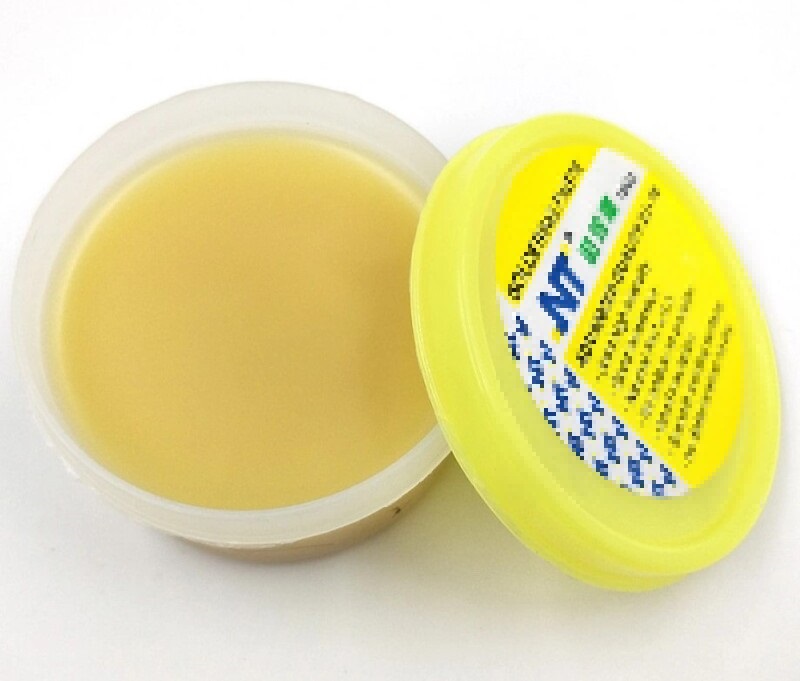
What are the components of welding flux?
Welding grease has a very complex chemical composition that varies depending on the specific type of welding grease and its intended use. Fundamentally, welding grease consists of the following components:
- Solvent: It is an inert environment that uses liquid to combine with active components such as water.
- Pine resin: It is a non-volatile compound with high-temperature resistance.
- Activator: It is a substance that dissolves or breaks down metal oxides. Typically, these are various acids and will exhibit corrosive properties.
- Surfactant: It is a cleaning agent used to reduce the contact angle of solder grease on the surface, allowing for greater coverage.
- Rheological substances: These are compounds that allow the liquid to exhibit non-Newtonian properties—meaning its viscosity can change depending on the applied pressure. At room temperature, solder grease is nearly inert; however, as the temperature rises, its inertness sharply decreases. This prevents metal oxides from forming on both the base material and the filler material. Additionally, it helps inhibit the agglomeration of soldering materials, making the heating process much smoother and more efficient.
The primary uses of welding grease
Welding grease plays a crucial role in the welding process, especially in the fields of electronics and precision engineering. The three primary benefits that welding grease provides are as follows:
- Effective antioxidant During the welding process, welding flux plays a crucial role in forming a protective layer. This protective layer isolates the metal surface from the air, thereby minimizing oxidation and ensuring that the weld remains strong and durable over time.
- Removing the metal oxide layer .The solder oxide layer can significantly affect the quality of the final components. Solder paste helps clean the surface by removing oxidized metal layers, thereby improving electrical conductivity, enhancing solder adhesion, and ensuring high-quality end products.
- Enhancing the wetting ability of solder . Using solder paste can improve the wetting properties of molten solder on metal surfaces, enhancing both the quality and precision of the solder joint.
What is solder paste used for?
The uses of What is solder paste? is an issue that cannot be overlooked when exploring welding grease. Welding grease is primarily used for the following key purposes:
- Solder paste is used to create soldering paste.
- Solder paste can act as a temporary adhesive. Thanks to this adhesive property, components are held together until the heat from the soldering process melts the solder, seamlessly joining the parts into one.
- After mixing, the solder paste will be primarily used in the stencil printing process. The solder paste will be spread onto the stencil according to the specifications on the printed circuit board.
- After printing, the circuit board formation process takes place, followed by heating and melting.
- Solder paste must have sufficient adhesion to securely join components together as they move through the production line.
- Temperature is a critical factor for solder paste during melting. A slow temperature rise helps prevent the formation of solder balls, yet the temperature must still be high enough to activate the solder paste. Once activated, the solder material melts and solidifies rapidly, allowing it to maintain the desired shape.
- Welding flux can minimize the adverse health effects on users, as it is safer than using lead-containing compounds or other hazardous substances for soldering.
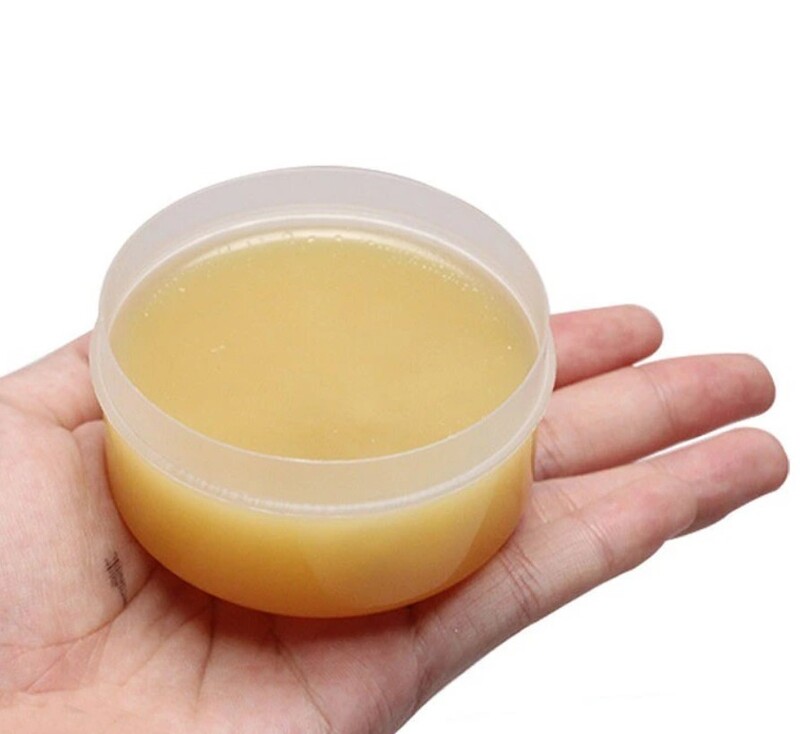
Should you choose welding grease or rosin?
This is a question many people have when using it. Welding with rosin becomes easier, and the solder material also adheres more effectively. Welding on circuit boards, however, must be done with extreme care. Rosin has excellent anti-oxidation properties, which is why it’s commonly used when soldering wires or repairing components damaged by corrosion. It truly serves as the best flux for soldering electronic devices, connectors, and electrical wires. That said, rosin tends to leave residues on the circuit board, so these residues must be cleaned off—otherwise, they could contaminate the manufacturing equipment.
The choice of solder paste is appropriate when the task doesn’t require cleaning. These are used in soldering SMD components, circuit boards, and BGA chips—particularly in hard-to-reach areas where cleaning isn’t feasible. The solder paste remains non-conductive, non-corrosive, and won’t damage metal chips.
Preservation and cleaning of welding grease
Welding grease must be stored properly to maintain its usability. It should be kept in a sealed environment to prevent evaporation. Storage temperatures need to remain low to slow down the degradation of flux additives and minimize oxidation rates. However, never store welding grease at freezing temperatures, as this can cause chemical separation.
Always ensure that no other impurities fall into the welding grease during use. Regularly check the expiration date of the welding grease and do not use it once it has expired.
Excess solder paste will dry on the circuit board and become harmless. However, you should still clean up the excess, as it could reduce the adhesion of the protective coating applied to the circuit.
So, the cleaning method What is solder paste? You can use the following dilution solution for cleaning.
- Pure Isopropyl Alcohol 95% 100ml
- 95% Pure Ethyl Alcohol 850ml
- Ethyl Acetal Solution 50ml
This solution must be stored in a tightly sealed bottle. If air gets in, it will alter the solution. Additionally, note that ethyl alcohol will evaporate when the cap is opened; therefore, gloves should be worn when handling ethyl alcohol and isopropyl alcohol during preparation to ensure safety.
Use a clean, soft, and flexible brush to avoid damaging the electronic components. Dip the brush into the freshly prepared solution, or you can use a spray bottle to apply it directly onto the circuit board. Then, wait for the Ethyl and Isopropyl solutions to react with the excess solder paste, helping to soften and dissolve it within a few minutes. Finally, gently and carefully clean the circuit board with the brush.
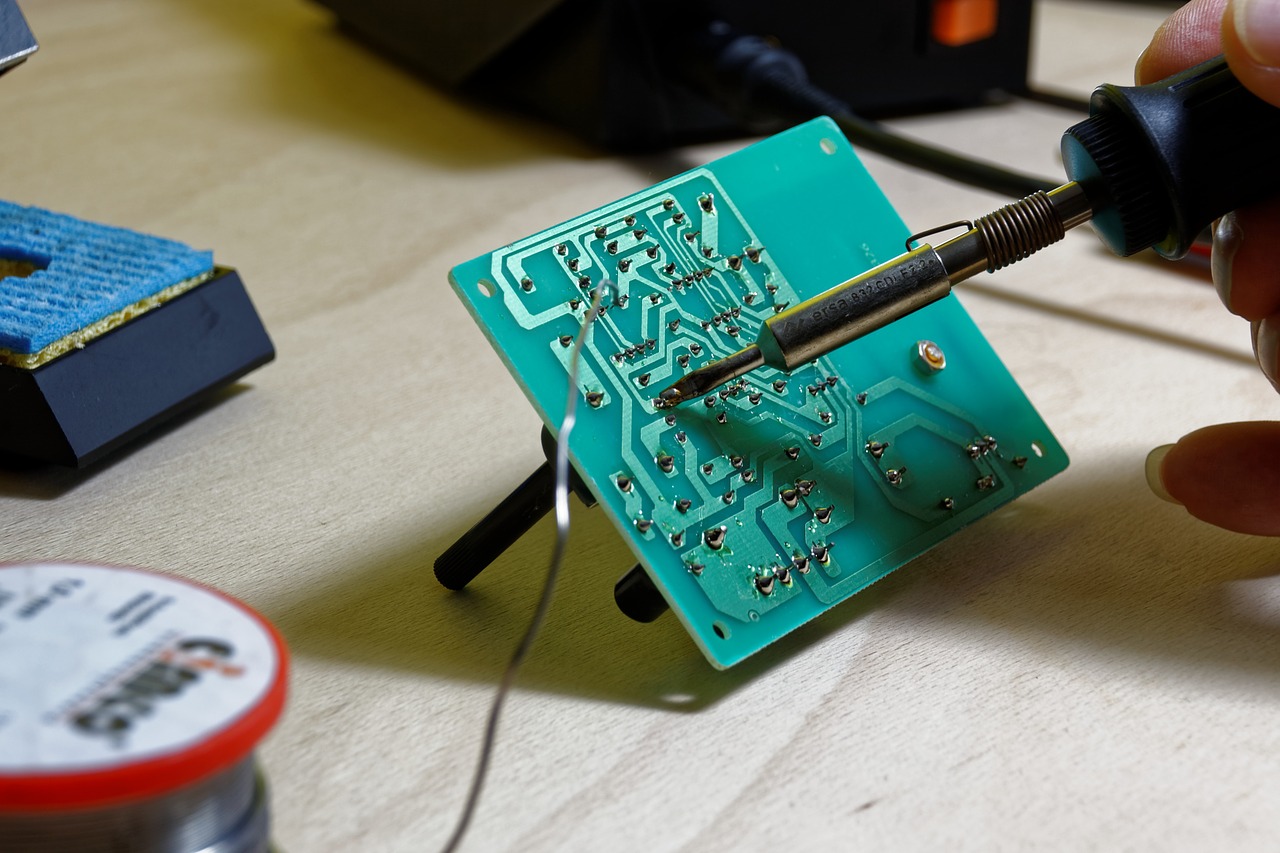
Conclusion
Above, Hapoin has just explored the information about What is solder paste? as well as the uses of welding grease. If you need clarification on any issues related to welding grease, please contact us for specific and prompt advice!
Contact Us
Contact Number:
+86 21 6088 8500
+86 4006 777 950
+86 150 2686 5822
Email:
marketing@hapoin.com
Headquarter Address:
6, South Metropolis Garden, No. 1165, Jindu Road, Minhang District, Shanghai
OUTLETS
Service Outlets

Shanghai-Head Office
Shanghai Hapoin Enterprise Development Co., Ltd.
Address: Building 6, Southern Metropolis Garden, No. 1165, Jindu Road, Minhang District, Shanghai
Telephone:+86 150 2686 5822
Email:info@hapoin.com
Shenzhen Branch
Shenzhen Hapoin Ruihe Technology Development Co., Ltd.
Address: Room 302, 3rd Floor, Building B, Kaicheng High-tech Park, Dalang Street, Longhua District, Shenzhen
Telephone:+86 0755 2223 2285
Email:sales@hapoin.com
Hong Kong Branch
HAPOIN ENTERPISE LIMITED
Address: Unit 917A, 9/F., Tower A, New Mandarin Plaza, No. 14 Science Museum Road
Telephone:+00852 61187991
Email:sales@hapoin.com
Vietnam Branch
HAPOIN VIETNAM
Address: 6th Floor, CTM Office Building, No. 139, Zhipiao Road, Zhipiao District, Hanoi, Vietnam
Telephone:+84 398 848 969
Email:sales@hapoin.com
Japan Branch
HAPOIN CO., LTD.
Address: 6th Floor, 2-3-8 Iwamotocho, Chiyoda-ku, Tokyo
Telephone:+81 070 9356 1267
Email:sales@hapoin.com
Kunshan Office
Kunshan Office
Address: 10th Floor, Building B, Modern Plaza, No. 8, Weiye Road, Yushan Town, Kunshan City
Telephone:+86 150 2686 5822
Email:sales@hapoin.com
Taipei Branch
Uniwin Chemical Co.,LTD.
Address: No. 14, Alley 3, Lane 250, Section 2, Huanhe South Road, Taipei 10853
Telephone:+886 02 2336 2202
Email:sales@hapoin.com
Beijing Office
Beijing Office
Address: Room 306, Building 4, Zhongtou Oriental, West Zhihe North, Chaoyang District, Beijing
Telephone:+86 150 2686 5822
Email:sales@hapoin.com






Contact Number
Headquarter Address
6, South Metropolis Garden, No. 1165, Jindu Road, Minhang District, Shanghai
Follow the official account
Follow the video account

