


News and Information
What is a solder paste mixer? Operating principle and practical applications
2025-11-07
In the field of SMT—Surface Mount Technology, solder paste quality is a core factor that directly impacts reflow soldering performance and the reliability of printed circuit boards (PCBs). Solder paste mixers have emerged as an optimal engineering solution, ensuring that the solder paste achieves a uniform consistency before being introduced into the manufacturing process. Thus What is a welding cream mixer? This is a question many SMT engineers ask when they first start learning about this equipment. In the article below, Hapoin will provide a detailed explanation of the concept, operating principle, and role of this device in SMT production, as well as its practical applications, offering a comprehensive overview of the solder paste mixer within the manufacturing line.
What is a soldering cream mixer?
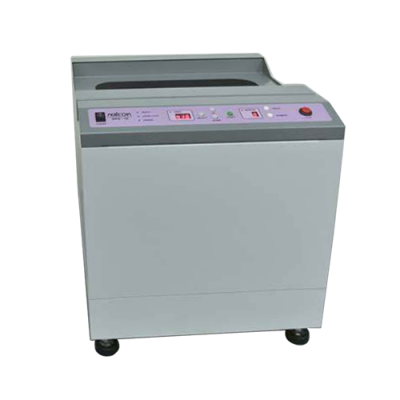
The solder paste mixer is a specialized SMT device designed to thoroughly blend solder paste (a mixture of tin powder, flux, and additives), ensuring optimal viscosity and uniformity before printing onto the PCB. Solder paste is typically stored at low temperatures ranging from 0 to 10°C. °C to maintain its chemical properties. Before use, the solder paste must be warmed to room temperature (around 25°C) and thoroughly mixed to restore its ideal consistency. Manually mixing solder paste is not only time-consuming but also increases the risk of ingredient separation or bubble formation, which can negatively impact the quality of the solder joint. A solder paste mixer automates this process, eliminating unwanted factors and ensuring the paste is perfectly ready for the next step—solder paste dispensing into molds. This equipment is especially critical in high-volume production environments, where stability and precision are paramount. Ultimately, the solder paste mixer serves as a vital tool for standardizing both solder quality and materials, minimizing errors right from the input stage.
The operating principle of a soldering paste mixer
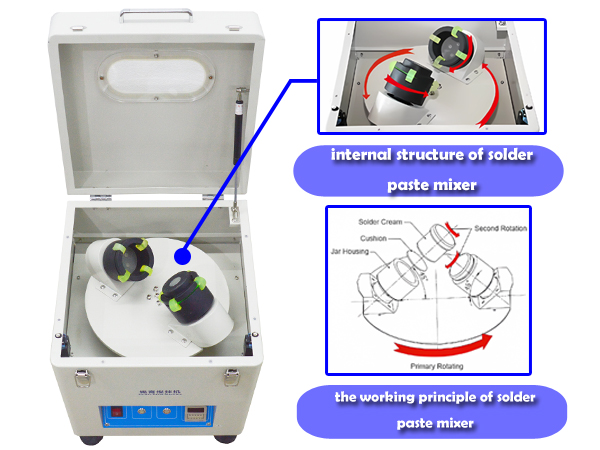
The welding cream mixer operates based on a dual centrifugal motion mechanism, combining both driven rotation and self-rotation to generate an efficient mixing force. The operational process includes the following stages:
- Prepare welding flux: The solder paste is taken from the cold storage and placed in a sealed container (typically a plastic jar or a specialized syringe). The tin solder paste container is then inserted into the mixing compartment of the machine, ensuring it remains leak-proof and free from contamination by the external environment.
- Centrifugal rotation mechanism: The machine uses a high-speed motor (typically ranging from 300 to 1000 RPM, depending on the configuration) to rotate the solder paste mixing box around two axes: the main axis (driven rotation) and the box’s independent axis (self-rotation). The centrifugal force generated by this dual motion ensures thorough blending of tin powder and flux, while simultaneously breaking down any unwanted bonds within the mixture. Some advanced models even feature an integrated vacuum system to eliminate air bubbles, further enhancing the smoothness of the solder paste.
- Parameter control: The operator sets the mixing time (typically between 2 and 10 minutes) and the rotation speed via the control panel. The machine can also maintain a stable temperature (25°C ± 2°C) throughout the process, ensuring the solder paste achieves the viscosity required for stencil printing.
This mechanism ensures the consistency of solder paste while minimizing oxidation— a critical factor in SMT that helps prevent soldering defects such as solder bridges or cold joints. From a technical perspective, if asked What is a welding cream mixer? , the answer lies in the advanced dual centrifugal mixing system, which allows for thorough blending of the tin powder and flux mixture with superior efficiency compared to manual methods, optimizing the input quality for both the stencil printing and reflow soldering processes.
What is the role of the solder paste mixer in SMT production?
In the SMT line, the solder paste mixer plays a fundamental role in the material preparation stage, directly influencing subsequent processes such as stencil printing, component placement (pick-and-place), and reflow soldering. Specifically:
- Ensuring the quality of welding flux: The solder paste is thoroughly mixed to eliminate separation between the tin powder and flux, ensuring precise stencil application onto the solder pads on the PCB. This minimizes defects such as insufficient solder or excess solder, which can lead to short circuits or weak solder joints.
- Ensuring the quality of welding flux: The solder paste is thoroughly mixed to eliminate separation between the tin powder and flux, ensuring precise stencil application onto the solder pads on the PCB. This minimizes defects such as insufficient solder or excess solder, which can lead to short circuits or weak solder joints.
- Optimizing production line performance: Compared to manual mixing, the automatic solder paste mixer significantly reduces preparation time (from 20–30 minutes down to 5–10 minutes), while ensuring consistent quality across batches of solder paste. This is especially critical in high-volume SMT production, where every second directly impacts overall productivity.
- Enhancing product reliability: Optimally formulated solder paste produces strong, reliable joints after reflow, enhancing the mechanical and electrical performance of PCBs. This meets stringent standards in industries such as consumer electronics, automotive, and medical devices, where even minor soldering defects can lead to critical failures.
Thanks to this, the tin solder paste mixer is not only a supportive tool but also a key factor determining input quality, closely linked to the subsequent steps in the SMT process. When considering What is a welding cream mixer? In production, we see it as an indispensable link in ensuring the smooth and efficient operation of the assembly line.
Practical applications of tin soldering cream mixers
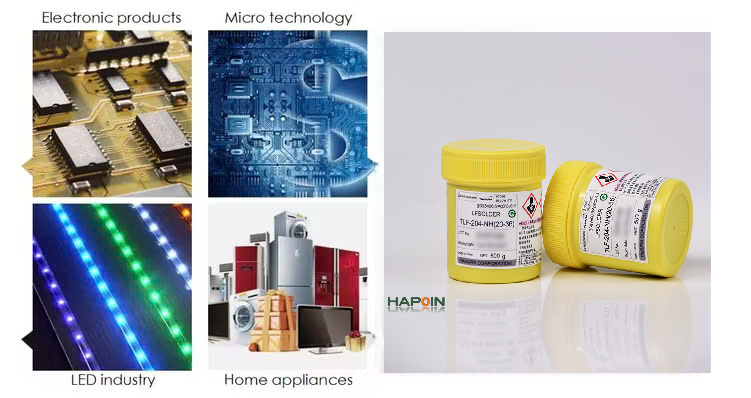
Solder paste mixers are widely used in SMT manufacturing and related fields, thanks to their ability to ensure solder paste quality in industrial environments. Some notable applications include:
- Electronic component manufacturing: Ensure uniform solder paste application for products such as smartphones, tablets, and computer circuit boards—applications characterized by high SMT component density and demanding absolute precision.
- Automotive industry: Supporting the manufacturing of control circuit boards (ECU - Electronic Control Unit) for automobiles requires durable solder joints under conditions of vibration and extreme temperatures.
- Medical equipment: Contributing to the production of devices such as blood pressure monitors and ultrasound machines, adhering to stringent standards for reliability and safety.
- Research and Development (R&D): Used in the laboratory to test new types of solder pastes (e.g., lead-free solder paste) or to optimize the reflow soldering process for complex PCB designs. Here, the question What is a welding cream mixer? It becomes even clearer as it supports both testing and actual production.
Technical benefits and usage notes
- Benefits: The solder paste mixer enhances the precision of the SMT process, reduces soldering defect rates (to below 1% when operated correctly), extends the pot life of the solder paste, and improves the overall efficiency of the production line.
- Note: To achieve maximum efficiency, it’s essential to follow the manufacturer’s instructions regarding mixing time and temperature; regularly clean the mixing chamber to prevent cross-contamination between different types of soldering compounds; and inspect machine components (such as seals or rotating shafts) for wear to ensure consistent performance. These precautions will help address the question to some extent. What is a welding cream mixer? From a practical operational perspective.
Conclusion
Above are the detailed information about What is a welding cream mixer? This is an essential piece of SMT equipment, ensuring that solder paste achieves optimal quality before moving on to the stencil printing and reflow soldering processes. Featuring advanced centrifugal rotation technology, this device delivers consistent results, eliminates air bubbles, and significantly boosts production efficiency. Its critical role in minimizing soldering defects and enhancing PCB reliability helps meet the stringent demands of today’s electronics industry. From mass production to research and development, the solder paste mixer not only supports but also shapes the overall quality of the SMT line, underscoring its vital importance in an era of rapidly advancing technology.
Contact Us
Contact Number:
+86 21 6088 8500
+86 4006 777 950
+86 150 2686 5822
Email:
marketing@hapoin.com
Headquarter Address:
6, South Metropolis Garden, No. 1165, Jindu Road, Minhang District, Shanghai
OUTLETS
Service Outlets

Shanghai-Head Office
Shanghai Hapoin Enterprise Development Co., Ltd.
Address: Building 6, Southern Metropolis Garden, No. 1165, Jindu Road, Minhang District, Shanghai
Telephone:+86 150 2686 5822
Email:info@hapoin.com
Shenzhen Branch
Shenzhen Hapoin Ruihe Technology Development Co., Ltd.
Address: Room 302, 3rd Floor, Building B, Kaicheng High-tech Park, Dalang Street, Longhua District, Shenzhen
Telephone:+86 0755 2223 2285
Email:sales@hapoin.com
Hong Kong Branch
HAPOIN ENTERPISE LIMITED
Address: Unit 917A, 9/F., Tower A, New Mandarin Plaza, No. 14 Science Museum Road
Telephone:+00852 61187991
Email:sales@hapoin.com
Vietnam Branch
HAPOIN VIETNAM
Address: 6th Floor, CTM Office Building, No. 139, Zhipiao Road, Zhipiao District, Hanoi, Vietnam
Telephone:+84 398 848 969
Email:sales@hapoin.com
Japan Branch
HAPOIN CO., LTD.
Address: 6th Floor, 2-3-8 Iwamotocho, Chiyoda-ku, Tokyo
Telephone:+81 070 9356 1267
Email:sales@hapoin.com
Kunshan Office
Kunshan Office
Address: 10th Floor, Building B, Modern Plaza, No. 8, Weiye Road, Yushan Town, Kunshan City
Telephone:+86 150 2686 5822
Email:sales@hapoin.com
Taipei Branch
Uniwin Chemical Co.,LTD.
Address: No. 14, Alley 3, Lane 250, Section 2, Huanhe South Road, Taipei 10853
Telephone:+886 02 2336 2202
Email:sales@hapoin.com
Beijing Office
Beijing Office
Address: Room 306, Building 4, Zhongtou Oriental, West Zhihe North, Chaoyang District, Beijing
Telephone:+86 150 2686 5822
Email:sales@hapoin.com






Contact Number
Headquarter Address
6, South Metropolis Garden, No. 1165, Jindu Road, Minhang District, Shanghai
Follow the official account
Follow the video account

